
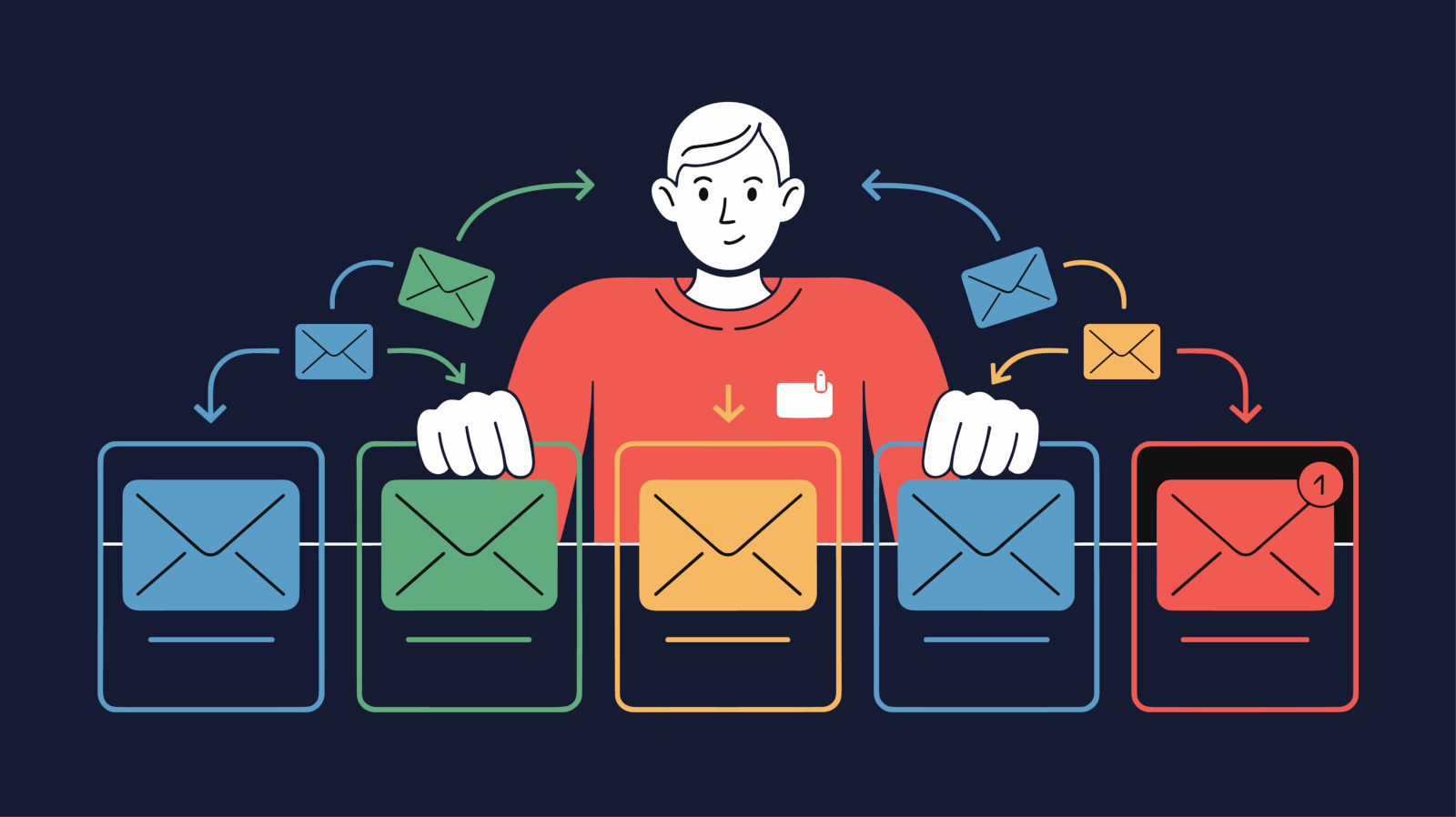
Email segmentation is the practice of dividing an email list into smaller groups and sending each group a message tailored to their needs.
It is one of the most cited practices in email marketing, and 24% of marketers rank it as the single most effective tactic for improving campaign performance, according to research from Litmus. For commercial marketers, email segmentation typically means sorting contacts by purchase history, browsing behavior, or stage in a conversion funnel. For group email list operators, the concept is the same but the criteria are different. A professional association, university, nonprofit, or community organization segments its list by role, location, interest, or membership type, not by buying behavior.
The question of what email segmentation is has different answers depending on context. This article explains what email segmentation is for group list operators, covers the types that apply to member organizations, and describes the practical benefits.
What Is Email Segmentation: Definition for Group List Operators
Email segmentation is the process of splitting a single email list into two or more sub-lists and communicating with each sub-list independently. Each segment receives messages that are relevant to the members in that group, rather than every member receiving the same message regardless of their role or interest.
For group email list operators, email segmentation solves a specific problem. A large, undivided list carries members with different information needs. A university email list that includes faculty, students, and administrative staff cannot serve all three groups with a single message. Faculty need policy updates. Students need deadlines and course notices. Administrative staff need operational communications. Sending all three the same email wastes the attention of two of them on every send.
Segmentation does not require sophisticated software or automation. It requires one decision: which groups within the membership need different information, and how frequently? Making that decision and acting on it is the core of email list management practice for member organizations.
Five Types of Email Segmentation for Group Email Lists
Marketing platforms typically offer more email segmentation types: behavioral email segmentation based on purchase history, geographic, and psychographic categories. Group email list operators work with a more straightforward set. The five most useful types for member organizations are role-based, location-based, interest-based, membership status, and communication format preference.
-
Role-based segmentation divides members by their function within the organization. A professional association might maintain separate lists for full members, associate members, student members, and board members. Each receives communications specific to their role. Board members receive governance updates. Student members receive career resources and discounted event notices. This is the most commonly implemented type of email segmentation for associations.
These are practical email segmentation examples: associations separating full members from student members, universities splitting faculty from graduate students. Each group gets the communications relevant to their role. - Location-based segmentation divides members by geography. An organization with regional chapters sends chapter-specific announcements to members in each region rather than broadcasting all regional news to the full membership. Members in the Pacific Northwest chapter receive Pacific Northwest chapter news. This applies equally to international organizations where time zone, language, or regulatory context varies by region.
- Interest-based segmentation divides members by the topics they have indicated an interest in, typically through a subscription preference form or a sign-up question. A medical association might maintain sub-lists for members interested in research updates, clinical guidelines, and legislative news. Each member subscribes to the topics relevant to their work. This type of email segmentation is most effective when self-selection is available at the sign-up stage.
- Membership status segmentation divides members by how long they have been on the list or where they are in the membership cycle. New members receive onboarding communications. Long-standing members receive updates relevant to their tenure. Members approaching renewal receive renewal reminders. Lapsed members receive re-engagement messages. This type maps directly to the lifecycle stages discussed in list management practice.
- Communication format preference divides members by how they prefer to receive email. Some members prefer individual messages as news breaks. Others prefer a weekly or monthly digest that consolidates multiple topics into one message. Offering both formats and maintaining separate lists for each reduces unsubscribes from members who find the send volume too high.
The Benefits of Email Segmentation for Member Organizations
Understanding why email segmentation is important for member organizations comes down to one factor: relevance. Segmented email campaigns consistently outperform unsegmented sends on every engagement measure.
The core benefit of email audience segmentation is relevance. A member who receives messages that match their role and interests is more likely to open and read those messages. A member who receives messages they do not care about is more likely to unsubscribe or, worse, mark the message as spam.
For member organizations, communication failure often means members feel out of the loop or overwhelmed by irrelevant messages. Email segmentation addresses both causes directly.
Specific benefits for group email list operators include: lower unsubscribe rates (members stay on a list when the content is relevant to them), higher open rates (relevant subject lines get opened), fewer spam complaints (members who expect and want the email do not report it), and better reach at critical moments (targeted email lists matched to member interests produce faster responses than broadcast messages to the full list).
For example, a medical association might use group email lists to communicate with a large, specialized membership. Dividing communication by role and interest area means that clinical updates reach practitioners, research updates reach investigators, and policy news reaches those engaged in advocacy. Each member receives what is relevant to their practice. The alternative, a single undivided list carrying all communications for all audiences, produces message fatigue and drives members to set up email filters or unsubscribe.
How to Segment a Group Email List
An email segmentation strategy begins before the list is built. How to segment email lists effectively depends on what data you can collect at sign-up. How to segment an email list without data means guessing at member needs. Capturing role or location at sign-up gives you the information to segment from day one.
Understanding email segmentation in practice starts with one question: what are the distinct communication needs within the current membership? The answer determines how many segments are needed and what criteria to use.
For a new list or a list being reorganized, the practical approach is to start with two segments and add more as needed. A single list carrying a mixed audience can often be divided into two groups that cover most of the variation in communication need. Two well-run segments outperform one poorly-targeted full-list message on every metric.
The data required to segment depends on the type.
- Role-based segmentation requires knowing each member’s role, which is usually captured at sign-up or imported from a membership database.
- Location-based segmentation requires a location field in the member record. Interest-based segmentation requires a preference question at sign-up.
- Membership status segmentation is derived from the subscription date and engagement history, which any well-managed list platform provides.
Segment size matters for mailing list segmentation. A segment with fewer than 10 members is a personal correspondence list, not an email list. Segmenting email lists into groups that small adds overhead without meaningful benefit. A minimum practical segment size is typically 25 to 50 members. Below that, direct personal communication is more appropriate.
Email segmentation best practices for group lists favor simplicity: two or three well-maintained segments consistently outperform twelve poorly-maintained ones.
Keep the segment structure simple. The most common email segmentation mistake for member organizations is over-segmenting. Creating twelve sub-lists where three would serve the communication need doubles the administrative overhead without doubling the benefit. Start with the minimum number of segments that addresses the actual variation in member need, then add segments when a new communication requirement emerges.
Email Segmentation and List Deliverability
There is a deliverability benefit to email audience segmentation that most group list guides overlook. A full understanding of email segmentation includes this dimension. When a list is well-segmented, each message goes only to members who have a reason to receive it. Members who receive relevant email are more likely to open it and less likely to report it as spam.
Receiving mail servers track engagement signals and use them to inform inbox placement decisions. A well-segmented list that generates consistent opens and low spam complaints maintains better inbox placement than an undivided list where a significant proportion of recipients are disengaged.
The inverse is also true. A large, undivided list that sends the same message to thousands of members, half of whom are indifferent to the content, generates more unengaged recipients. Each disengaged recipient is a small drag on sender reputation. Over time, a poorly-targeted list that consistently sends to disengaged members will see deliverability decline.
This is the part of email segmentation that most guides for group list operators miss. Segmentation is not only a communication quality improvement. It is a deliverability management practice. Maintaining good email list hygiene alongside segmenting email lists protects the organization’s ability to reach its members reliably over time.
What to Look for in a Platform That Supports Email Segmentation
Email segmentation tools range from single-list platforms with no sub-group capability to multi-list systems that support independent settings for each segment.
Knowing what email segmentation is in theory is only useful if the hosting platform supports it in practice. Not all group email hosting platforms support email segmentation. Some offer only a single list with no sub-group functionality. When selecting a platform or reviewing the current one, the segmentation capabilities to look for are: multiple list support under a single account, the ability to import subscriber data with custom fields (role, location, preference), and the ability to send to one list without sending to others.
Simplelists supports multiple lists per account, meaning an organization can run targeted email lists for each segment under one administrative login. Each list has its own settings, welcome message, and archive. Members can be subscribed to multiple lists simultaneously if they need to receive communications from more than one segment. Read our guide on segmenting your email distribution list with Simplelists for step-by-step implementation. The personalized group email approach to list management supports this segmented structure without requiring separate accounts or contracts for each list.
The more important capability is the ability to maintain clean, separated subscriber data across segments. Members who unsubscribe from one list should remain on other lists they are subscribed to, unless they have requested removal from all lists. This requires the platform to treat each list as an independent subscriber registry. Simplelists manages this at the individual list level, so a member’s status on one list does not affect their status on another.
- Run multiple segmented lists under one account.
- Set individual welcome messages, archives, and settings for each segment.
Frequently Asked Questions
What Is Email Segmentation?
To fully understand email segmentation, start with the definition: it is the process of dividing an email list into smaller sub-groups and sending each group a message tailored to their specific needs or characteristics. What is email list segmentation? It is the same concept applied specifically to subscriber lists, as distinct from CRM databases or contact records.
For commercial email marketers, the criteria are typically purchase behavior, browsing history, or funnel stage. For group email list operators, the criteria are role, location, interest, membership status, or communication format preference. Segmentation improves communication relevance because members receive messages that match their actual role and interests rather than a single undivided message sent to the full list regardless of who will find it useful.
What Are the Main Types of Email Segmentation?
The main types of email segmentation for group email list operators are:
- role-based (dividing by member function within the organization),
- location-based (dividing by geographic region or chapter),
- interest-based (dividing by self-selected topics),
- membership status (dividing by tenure, engagement level, or lifecycle stage), and
- communication format preference (dividing by those who prefer individual messages versus digest format).
Marketing platforms add behavioral and purchase-history segmentation types, but these are not relevant to member organizations that do not sell products or track purchase behavior.
What Are the Benefits of Email Segmentation?
The benefits of email segmentation for group email list operators are:
- lower unsubscribe rates (members stay when content is relevant),
- higher open rates (relevant subject lines get opened),
- fewer spam complaints (expected email is not reported),
- better reach at critical moments (targeted messages generate faster responses than broadcast messages), and
- improved deliverability over time (engaged recipients maintain sender reputation).
Research from Litmus found that 24% of marketers rank email segmentation as the most effective tactic for improving campaign performance, making it the top-ranked individual tactic among all email strategy options.
How Do I Start Segmenting My Email List?
Once you are clear on what email segmentation is for your organization, start by identifying the distinct communication needs within your membership.
Ask: which members need different information from the rest? Begin with two segments that address the most significant variation, then add more as specific communication needs emerge.
Each segment type needs different data.
- Role-based needs a role field captured at sign-up or imported from a membership database.
- Location-based needs a location field. Interest-based needs a preference question at sign-up.
- Membership status is derived from subscription date and engagement history.
Keep the number of segments small. Two well-run segments outperform twelve poorly-maintained ones.
How Many Segments Should a Group Email List Have?
The right number of segments for a group email list is the minimum that addresses the actual variation in member communication needs. Most small to mid-sized member organizations need two to four segments.
A large association with regional chapters, role-based communication needs, and an active board might run six to eight segments. The most common mistake is over-segmenting: creating sub-lists that are too small to manage efficiently or that overlap so much that members receive redundant messages.
A practical minimum segment size is 25 to 50 members. Below that, direct personal communication is more appropriate than a managed group list.
Does Email Segmentation Improve Deliverability?
Yes. Email segmentation improves deliverability indirectly by improving engagement. When members receive messages that are relevant to them, they open those messages and do not report them as spam. Receiving mail servers use engagement signals to inform inbox placement decisions.
A well-segmented list that generates consistent opens and low spam complaint rates maintains better inbox placement than an undivided list with a significant proportion of disengaged recipients. Over time, consistently sending relevant email to the right segments protects the organization’s sender reputation and ensures members continue to receive messages reliably.
What Is the Difference Between Email Segmentation and Email Personalization?
Email segmentation and email personalization are related but distinct. Segmentation means dividing a list into groups and sending group-level messages tailored to each group’s common needs. Personalization means customizing individual elements of a message for each recipient, such as addressing them by name or referencing their specific membership tier.
Segmentation is a list management decision about who receives which messages. Personalization is a message composition decision about how the message reads for each individual. Group email list operators typically start with segmentation. Personalization is a further enhancement that can be applied within each segment.
Can Members Belong to More Than One Email Segment?
Yes. Members can belong to more than one segment simultaneously when their role or interests span multiple communication needs.
A faculty member who chairs a regional chapter committee might belong to both the faculty segment and the regional chapter segment. On platforms that support multiple lists per account, including Simplelists, a member can be subscribed to more than one list. Each list is managed independently. If the member unsubscribes from one, they remain on the others.
The key consideration is avoiding message overlap: if the faculty segment and the regional chapter segment regularly send the same content, members in both will receive duplicates, which produces unsubscribes.
What Data Do I Need to Segment a Group Email List?
The data required for email segmentation depends on the segment type. Role-based segmentation requires a role or member-type field, captured at sign-up or imported from a membership database.
Location-based segmentation requires a location or chapter field. Interest-based segmentation requires a preference question at sign-up or a separate preference form sent to existing members. Membership status segmentation requires subscription date and, if the platform provides it, engagement history such as open or click data.
Most group email list platforms capture subscription date automatically. Role and location fields require a structured import or a custom sign-up form with those fields included.
How Does Simplelists Support Email Segmentation?
Simplelists supports email segmentation through multiple-list hosting under a single account. An organization can run separate lists for each segment, each with its own welcome message, archive, and settings. Members can be subscribed to more than one list simultaneously.
Unsubscribing from one list does not affect the member’s status on other lists. Each list is managed as an independent subscriber registry.
Simplelists is ISO 27001 certified by NQA (a UKAS-accredited certification body) and has held SuretyMail IADB email accreditation since 2007. Data is hosted in UK data centers (and optionally US data centers).